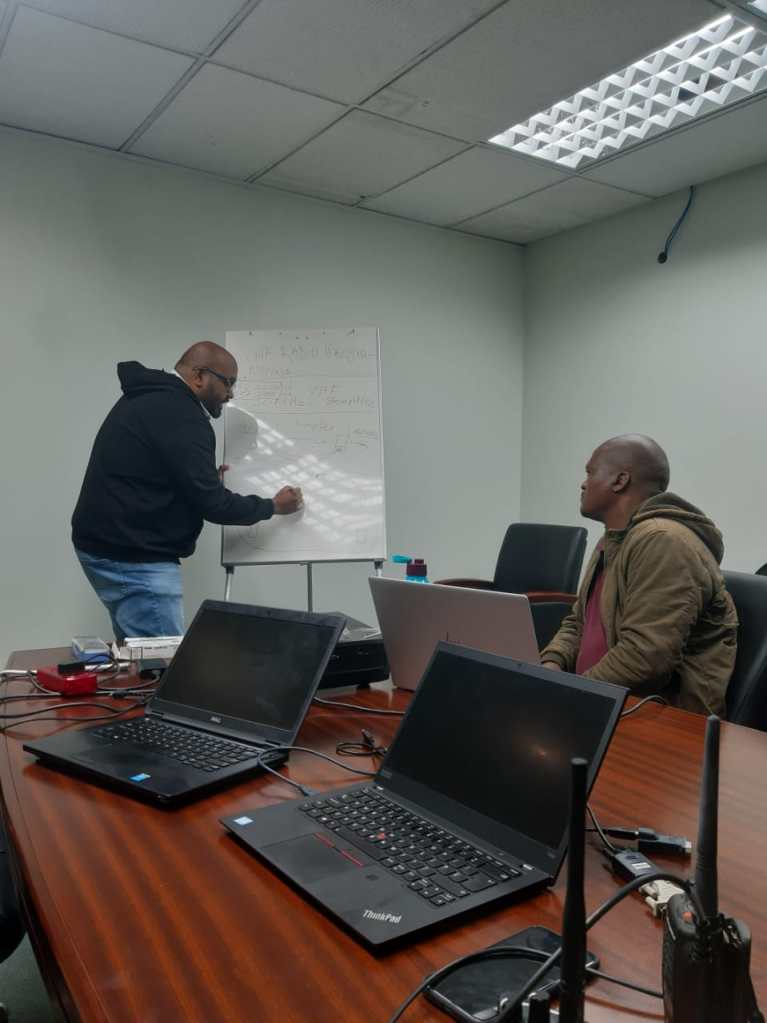
Security communications has changed over the years due to advances in technology and the way users interact with technology. In addition, the United Nations Security Management System (UNSMS) modified its earlier approach and language from “Emergency Communications Systems” (ECS) to “Security Communications Systems” (SCS) to encompass support for overall security communication needs under all circumstances, and not only in emergencies. The UN SCS is supported by security operation centres (SOCs) and implemented through standard operating procedures (SOPs).
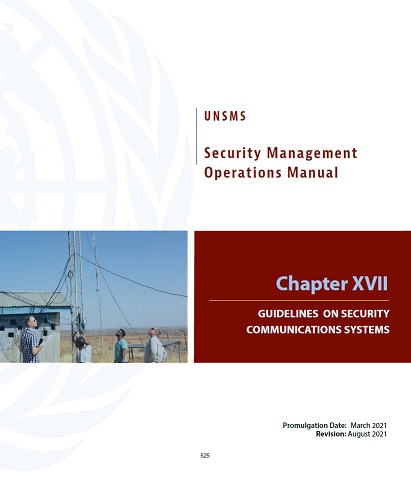
The main reference for UN SCS guidance is the Security Management Operations Manual (SMOM) Chapter XVII on SCS. {TESS+} established a working group that included security representatives from the UNSMS and led the efforts to update the SMOM Chapter XVII based on field findings and recommendations. The SMOM chapter on SCS provides practical overall guidance on the identification, implementation, operation, support and use of SCS by the UNSMS in support of the safety and security of its personnel. The SMOM Chapter XVII currently consists of 17 annexes as listed below.
- Annex A: Background on TESS and {TESS+}
- Annex B: Template TOR for Security Operations Centres (SOCs)
- Annex C: Template TOR for Security Operations Centre Assistants
- Annex D: Guidance for operational areas without the physical presence of a Security Operations Centre
- Annex E: Guidelines for the technical evaluation of a mobile telephone network’s suitability as a Security Communications System (SCS) tool
- Annex F: Guidelines on the role of the ICT Working Group in support of a Security Communications System
- Annex G: Standard Operating Procedures (SOPs) for movement monitoring
- Annex H: Standard Operating Procedures (SOPs) for communication checks
- Annex I: Guidance for the maintenance of a radio-based Security Communications System
- Annex J: Guidance on the setup and management of a communications tree
- Annex K: Template TOR for Security Operations Centre Supervisor
- Annex L: Guidance for the implementation and operation of a Remote Security Operations Centre (RSOC)
- Annex M: Guidance on conduction basic self-assessment for connectivity solutions in line with the Security Communications System (SCS) in an operational area
- Annex N: Guidelines on the use of mobile satellite service (MSS) voice services as an SCS connectivity solution
- Annex O: Guidance on the country Security Communications System (SCS) scorecard.
- Annex P: Guidance for Standard Operating Procedures (SOPs) supporting UHF/VHF radio-based Remote SOC operations
- Annex Q: Practical guidance on how to phase-out HF radio as a SCS tool
UNSMS technical bulletins:
{TESS+} produces technical bulletins on designing, implementing, operating and maintaining UN SCS networks in compliance with the SMOM. A number of domains are covered as listed below.
1) VHF/UHF radio networks (click links to download)
Design of VHF/UHF radio networks according to UN SCS standards – English, French, Spanish
VHF Motorola radio programming manuals according to UN SCS standards
VHF ICOM radio programming manuals according to UN SCS standards
2) MSS (Mobile Satellite Systems) (click link to download)
Technical & practical guidance on using MSS Push-to-Talk (PTT) services as an SCS tool
Report on personal GPS tracker device testing by {TESS+}
Report on Thuraya One satellite smartphone device testing by {TESS+}
3) Electrical and power backup systems for SCS (click link to download)
Electrical and backup power systems for UN Security Communication Systems (SCS) technical manual
{TESS+} UN SCS recommendations:
1) Recommendation on the use of MSS voice as a SCS tool (click link to download)
Recommendations on the use of MSS voice services as a Security Communications Systems (SCS) tool
2) Recommendations on the use of Vehicle Tracking Systems (VTS) as a SCS tool (click link to download)
Recommendations for the use of VTS as a Security Communications Systems tool
3) Recommendations on phasing out HF radio communications: (click link to download)
Recommendations and technical guidance on- the phase out of HF radio, per operational area
{TESS+} Manuals:
1) Register for the {TESS+} Restricted Library (click link to download)
Guide on how to access the {TESS+} Restricted Library (for UN personnel only)
 {TESS+} Telecommunications Security Standards