History of UN Security Communication Systems (SCS)
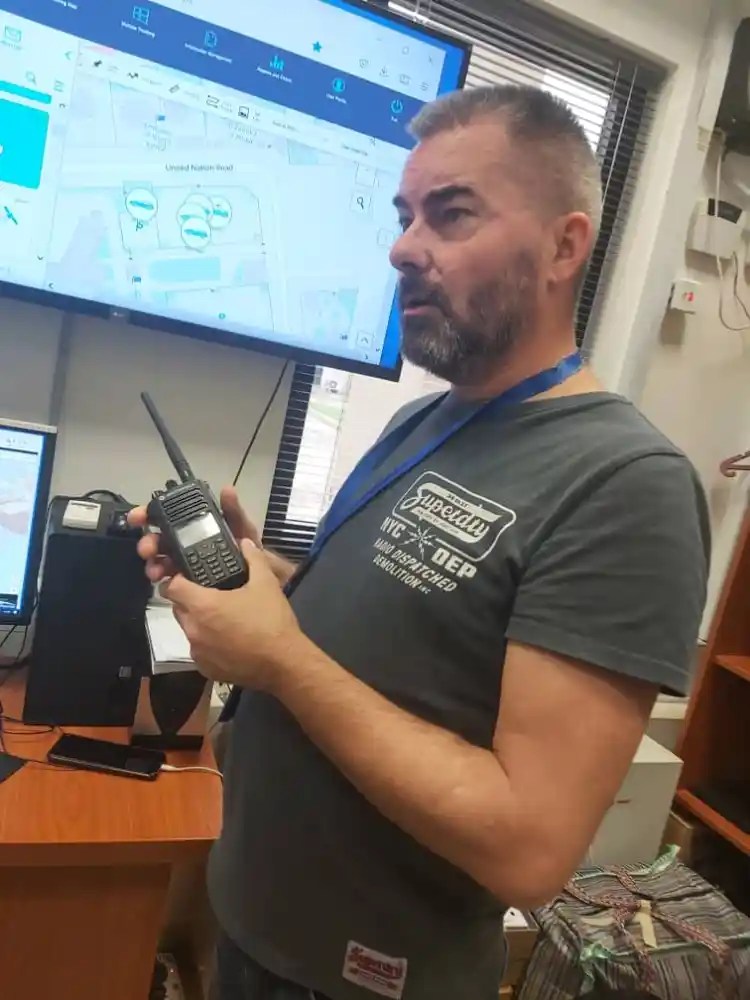
Inter-agency standards for UN Security Communications Systems (SCS) were initially established in the late 1990s by UNSECOORD and an informal inter-agency technical working group, consisting of UNHCR, UNICEF, UNDPKO and WFP. These standards were expanded and forming part of the Minimum Operating Security Standards (MOSS) as outlined in the Field Security Handbook of 2006, which preceded the Security Policy Manual and the Security Management Operations Manual (SMOM). In 2009, reference was made to the standards within the MOSS policy as part of the Security Policy Manual. At that time, guidance was provided by the Working Group on Emergency Telecommunications (WGET). With subsequent amendments to security policies and the revision of the Security Risk Management Policy which took into account MOSS and security risk management measures, specific responsibilities for security communications were not identified nor afforded to any entity. The Telecommunications Security Standards (TESS) project was started to address the need of reviewing UN SCS standards in line with requirements and current technologies.
How {TESS+} started
As of May 2018, at the request of the Inter-Agency Security Management Network (IASMN, chaired by UNDSS) and the Emergency Telecommunications Cluster (ETC, chaired by WFP), a new interagency collaborative project, called Telecommunications Security Standards (TESS), was formed to standardize the UN SCS for both existing and future purposes. Hosted by WFP, TESS worked in collaboration with all UN entities (represented through the IASMN), in consultation with NGOs (represented through the ETC), individual communications and security experts, and the private and public sector.
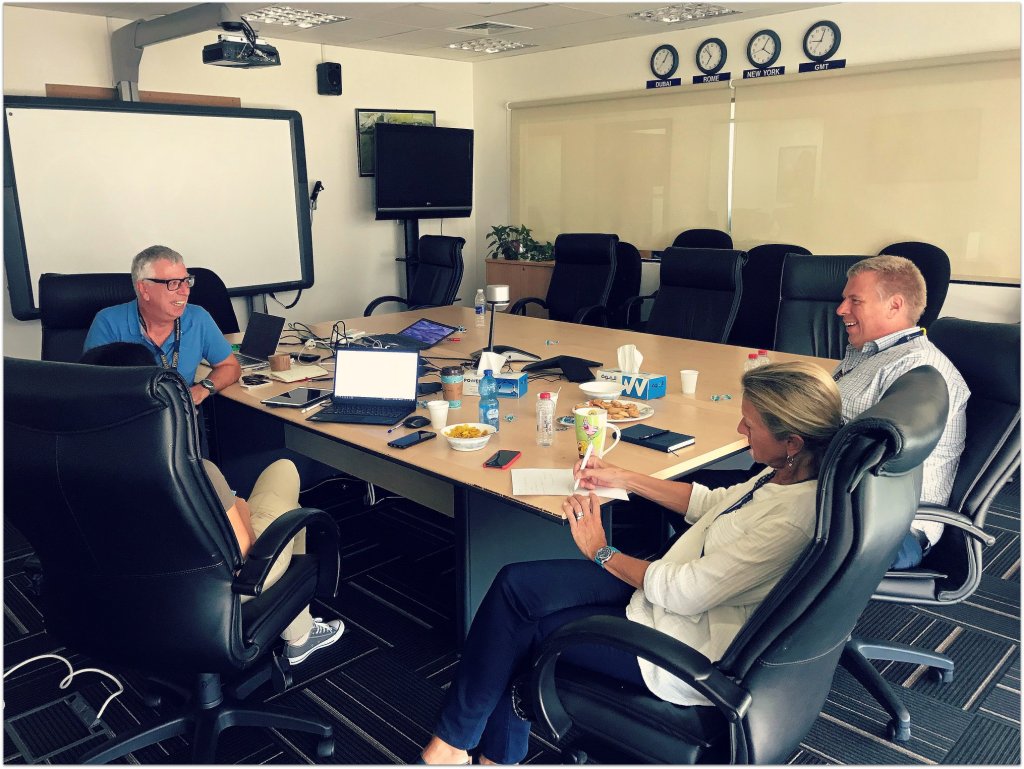
Back in 2018: {TESS+} Senior Programme Manager on a visit to the WFP Dubai office to engage FITTEST expertise in the technical requirements of the project for field operations on UN Security Communication Systems (SCS).
In January 2020, the IASMN and ETC endorsed the conversion of TESS as a project, into {TESS+} as a permanent and institutionalized support service to the UN Security Management System (UNSMS) and NGO community, and as of July 2020, with a mandate, budget, service deliverable and governance structure similar to TESS.
{TESS+} mandate
In addition to the {TESS+} mandate on the longer term standardization of UN SCS systems, {TESS+} provides active field support, guiding and assisting the UNSMS in establishing pragmatic and cost effective SCS solutions. As such, {TESS+} is the primary global focal point for guidance and support on SCS in the UNSMS and NGOs, working closely with telecommunications/ICT technical personnel from UNSMS organizations through the ICT Working Groups (ICTWGs), and security personnel of the UNSMS and NGO stakeholders.
At the country level, UN entities are strongly encouraged to adopt, implement and use the {TESS+} recommendations and guidance.
{TESS+} service charter
The {TESS+} service charter provides an overview of the {TESS+} services, summarizing the “why-who-what-how” including the requirements, mandate, key services, governance, accountability, oversight and reporting, service model, staffing and funding, The {TESS+} service charter document is based on the “{TESS+} Programme of Work”, as endorsed by the IASMN in January 2020, adapted with subsequent additional feedback collected in a consultative process. The main input was provided by the ad-hoc “{TESS+} Future” consultative group consisting of the {TESS+} Inter-Agency Steering Group (IASG) members and IASMN representatives. The first version of the {TESS+} service charter was endorsed by the IASMN in January 2021.
To adopt the agreements reached in converting TESS (as a project) into {TESS+} (as a permanent service), inputs from UNDSS, WFP, the {TESS+} Inter-Agency Steering Group, ETC, IASMN Steering Group and IASMN were adopted into the final version. You can download {TESS+} service charter here.
{TESS+} governance matrix
| Responsible | Accountable | Consulted | Informed | |
| 1. Normative services | ||||
| Standards design: | {TESS+} Senior Programme Manager (SPM) supported by the {TESS+} IASG and IASG working groups | Chair of the IASMN (UNSMS), Chair of the ETC (NGOs) | IASG, IASMN TAG, ETC, UNDSS DRO (and IASMN WGs where appropriate) | All involved R-A-C stakeholders, TESS Online Community |
| Standards documentation: | {TESS+} SPM (supported by IASG and IASG working groups) | Chair of the IASMN (UNSMS), Chair of the ETC (NGOs) | IASG, IASMN TAG, ETC | All involved R-A-C stakeholders, TESS online community |
| Assessments and monitoring: | {TESS+} SPM supported by the {TESS+} Core Service Team (CST) | Designated Official (DO) of the target country (supported by the field UNSMS and ICTWG) | IASG, IASMN TAG, ETC (where deployed), UNDSS DRO, field UNSMS and ICTWGs | IASG, IASMN TAG, field UNSMS and ICTWGs, UNDSS DRO (where appropriate: Regional and HQ UNSMS technical and security personnel) |
| Implementation of global standards and {TESS+} assessment recommendations: | Field UNSMS and ICTWG | Designated Official of the target country (supported by the field UNSMS and ICTWG) | SPM (supported by CST) | IASG, IASMN TAG, field UNSMS and ICTWGs, UNDSS DRO (where appropriate: Regional and HQ UNSMS technical and security personnel) |
| 2. Field support services | ||||
| Standards implementation support: | {TESS+} SPM supported by the CST | Designated Official of the target country (supported by the country UNSMS and ICTWG) | IASG, IASMN TAG, field UNSMS and ICTWGs, UNDSS DRO (where appropriate: Regional and HQ UNSMS technical and security personnel) | IASG, IASMN TAG, field UNSMS and ICTWGs, UNDSS DRO (where appropriate: Regional and HQ UNSMS technical and security personnel) |
| On-demand support: | {TESS+} SPM supported by the CST | Designated Official of the target country (supported by the country UNSMS and ICTWG) | Field UNSMS and ICTWGs (where appropriate: Regional and HQ AFP technical and security personnel) | IASG, IASMN TAG, field UNSMS and ICTWGs, UNDSS DRO (where appropriate: Regional and HQ AFP technical and security personnel) |
| Implementation of recommendations from field support services: | Field UNSMS and ICTWG | Designated Official of the target country (supported by the field UNSMS and ICTWG) | SPM (supported by CST) | IASG, IASMN TAG, field UNSMS and ICTWGs, UNDSS DRO (where appropriate: Regional and HQ UNSMS technical and security personnel) |
| 3. Operational support processes | ||||
| Global level: | SPM (supported by IASG) | Coordinating agency | CA, IASG, IASMN | CA, IASG, IASMN, ETC |
| Field level: | SPM (supported by IASG) | Coordinating agency | CA, IASG, IASMN | CA, IASG, IASMN, ETC |
{TESS+} team
The {TESS+} Senior Programme Manager is appointed by the coordinating agency (CA) as the overall {TESS+} coordinator and facilitator, and is responsible for {TESS+} service delivery and operations. The World Food Programme (WFP) is the current {TESS+} CA. The {TESS+} Core Service Team (CST) is the operational arm of {TESS+} consisting of subject matter technical experts either directly contracted by the coordinating agency (and thus functionally and administratively reporting to the SPM), or seconded by donors or {TESS+} stakeholders. The CST is involved in field assessments, field support, coordination of all technical tests, and input to other processes such as the design of training and manuals.

Martin Kristensson
Senior Programme Manager
Martin Kristensson, a Swedish national, has served over two decades with the United Nations, implementing life-saving information technology solutions in some of the world’s most severe humanitarian crises. Starting as the inter-agency ICT coordinator for the UN Department of Humanitarian Affairs (DHA) in Rwanda. Martin worked with various UN agencies including UN OCHA, UNDP, and UNOPS before joining the UN World Food Programme (WFP) in 2001 as part of the Fast IT and Telecommunications Emergency and Support Team (FITTEST). He played a key role in IT responses to emergencies in Afghanistan, Iraq, Darfur, Indonesia, Haiti, and the Philippines, later becoming Chief of FITTEST and then Global IT Emergency Coordinator at WFP headquarters. After leading global UN reform efforts within WFP’s technology division, Martin’s recent work focused on strengthening telecommunications for emergency responses in the Philippines. He assumed his current role as {TESS+} Senior Program Manager in mid-2024.
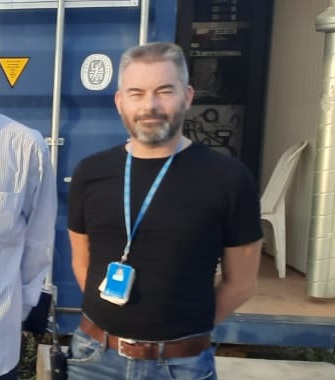
Michael DIRKSEN
Senior Assessment Officer / Operations Coordinator
Michael has a long career within the UN system, working in humanitarian operations around the world. He manages the logistics for all {TESS+} missions and, as a senior assessment officer, reviews UN SCS in line with the official standards. He is well-experienced in emergency coordination and security telecommunications.
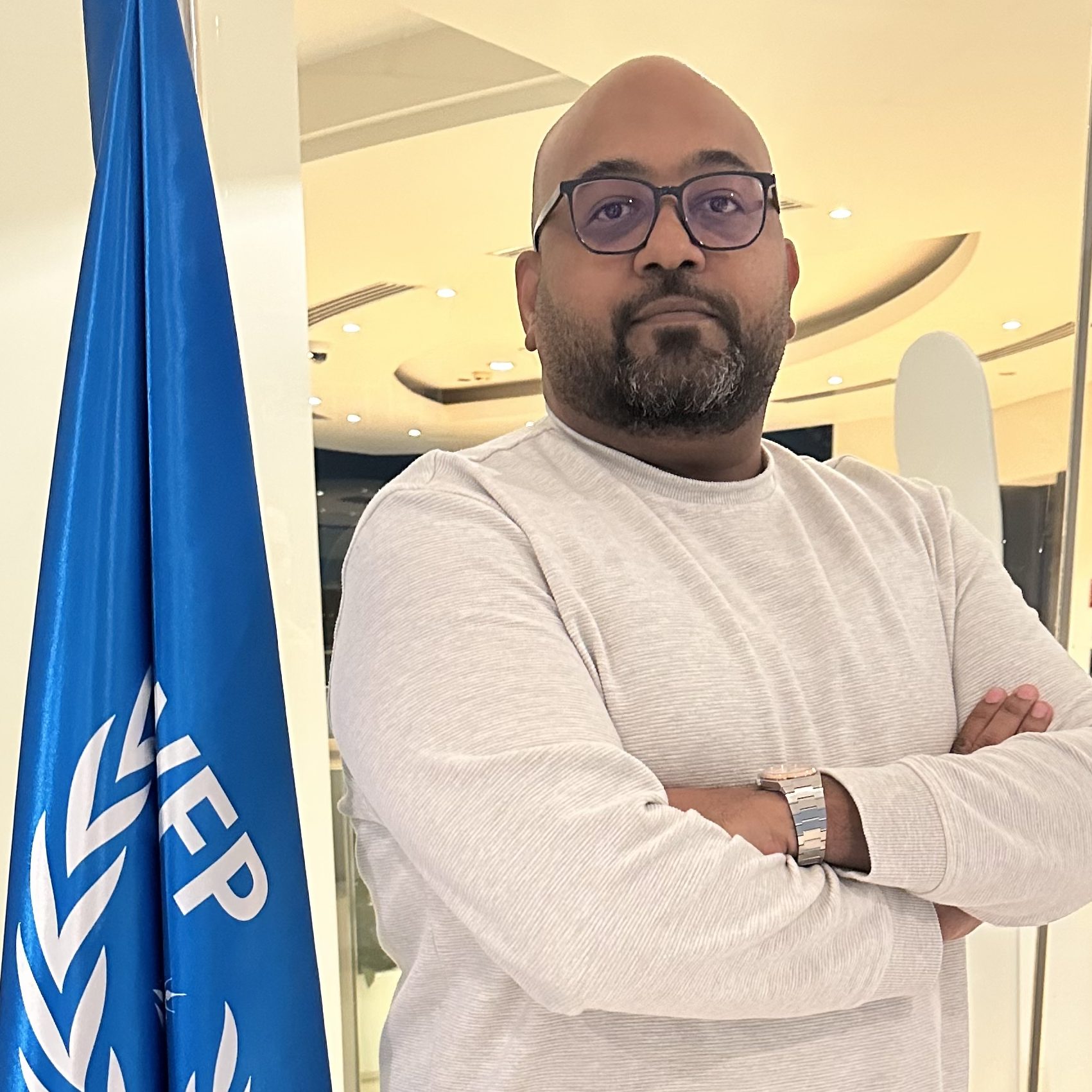
Moaied ALTAI
Senior ICT Specialist
Moaied is an experienced telecommunications specialist who worked in the private sector before joining the UN. He is skilled in radio frequency (RF) systems, hardware installations, telecommunications, and VHF technologies. Moaied regularly conducts {TESS+} technical missions.

John BURSA
Senior Assessment Officer
John is a highly skilled technical specialist with well over 20 years’ experience in the UN system. He conducts comprehensive UN SCS assessments, is the desk officer for over 40 countries, and works with teams such as UNDSS, ICTWGs, Security Cell’s and SMTs globally to strengthen their SCS. He is also heavily involved in the eTA system and the rollout of eTA BulkSMS globally, overseeing more than 100 countries’ operations to date.
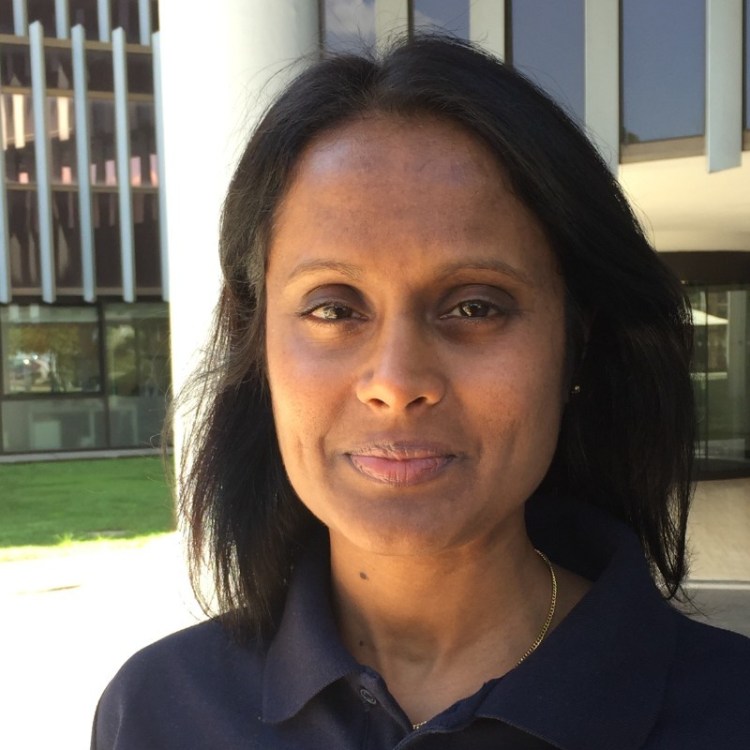
Salma FAROUQUE
Training Coordinator
Salma has over 20 years of professional experience in the private and humanitarian sectors. She holds a Bachelor of Engineering (Electrical and Electronic) and a Master of Commerce. Salma has worked in the telecommunications sector in Australia and has experience working in Africa, the Middle East, Asia, Europe and the Pacific Islands. Salma coordinates {TESS+} training activities and projects, conducts {TESS+} assessment missions, and serves as a desk officer for a number of countries. Salma has been part of the {TESS+} team since 2019.
 {TESS+} Telecommunications Security Standards