Updates collated by {TESS+} as of March 2026
The rapid expansion of low‑cost satellite connectivity is reshaping the global communications landscape. Services such as Starlink have marked a significant shift, offering affordable, easy‑to‑deploy, high‑speed, low‑latency connectivity in locations previously underserved or entirely unserved. For humanitarian organisations, this has opened new possibilities for maintaining communications in remote, insecure, or infrastructure‑poor environments.
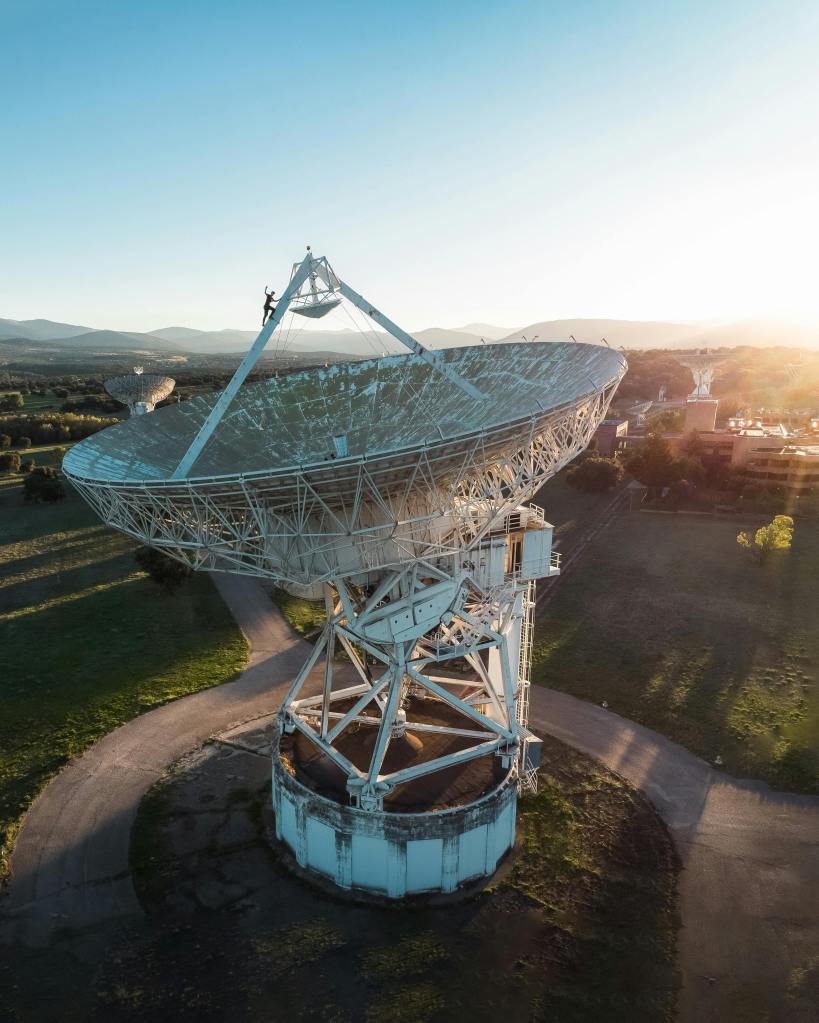
While Starlink currently provides the most mature global service, it is no longer the only option. Other providers are entering the market, including Amazon’s Low Earth Orbit (LEO) constellation, which has begun full‑scale testing and is expected to become commercially available in selected countries from 2026. Additional operators have announced launches within the same timeframe, increasing competition and choice. As these services mature, terminals are becoming smaller, more affordable, and easier to operate, with improving performance.
As a result, satellite terminals are increasingly deployed in locations without reliable terrestrial connectivity. Offices, warehouses, and field sites may rely on satellite services as a primary or secondary connection. Mobile deployments are also expanding, with terminals installed in vehicles to provide connectivity while in transit, act as a communications hub on arrival, and link teams to Security Operations Centres. In some contexts, terminals are also being installed in staff residences where commercial internet access is unavailable or unaffordable. Several of these use cases are already operational in a limited number of countries.
Interference and Operational Risks
Jamming and spoofing affect all services that rely on radio‑frequency signals. Although humanitarian organisations are rarely the direct targets, their systems are increasingly impacted. In multiple regions, satellite navigation systems such as GPS, GLONASS, and Galileo are unreliable or unavailable, forcing staff to revert to manual navigation and tracking methods. This leads to operational delays and increased safety risks, particularly for aviation, maritime operations, emergency response, and systems dependent on precise timing, including telecommunications and financial networks.
These disruptions do not affect navigation systems alone. Traditional VSAT systems, satellite phones, and newer LEO terminals can all experience degraded performance or complete service outages. Interference is often intermittent and unpredictable, making mitigation challenging. As jamming and spoofing are likely to persist, humanitarian organisations must improve their ability to detect interference, apply appropriate countermeasures, and gradually transition towards more resilient communication systems capable of operating in contested environments.
Government Control and Regulatory Constraints
Satellite connectivity does not operate in a regulatory vacuum. While some services currently function in countries without explicit government authorisation, this situation is evolving. Satellite operators are increasingly required to partner with governments to obtain licences and market access. Even where services are technically available, access may be restricted or blocked without formal approval. Recent events have demonstrated that governments can impose temporary or prolonged limitations on satellite connectivity during periods of political or security sensitivity.
As a result, countries can broadly be grouped into four categories.
- Countries embracing new services – Satellite services complement ISPs and terminals and may continue operating during incidents. They can be considered for inclusion as primary or secondary components of the Security Communications System (SCS).
- Countries allowing services with restrictions – Satellite services complement ISPs but may be limited or disabled by authorities. They should be treated as standard ISP services and not as independent SCS components.
- Countries without official services – Terminals may function but lack formal support, often requiring roaming or special activation, swith no assurance of reliability or continuity.
- “Geofenced” countries – Services are disabled by operators and terminals are generally unusable, except in rare cases.
Humanitarian organisations represent only a small fraction of the satellite communications market. Many providers have limited understanding of humanitarian operational needs, highlighting the importance of proactive engagement and partnerships. In emergency contexts, such collaboration has already proven valuable, as demonstrated by the provision of satellite terminals during major natural disasters.
Low Earth Orbit (LEO)
Low Earth Orbit satellites provide high‑speed, low‑latency connectivity by operating closer to Earth than traditional GEO satellites. They enable broadband access in remote and underserved areas and support scalable, resilient networks through large satellite constellations integrated with terrestrial systems.
Global coverage requires hundreds of satellites, a scale currently achieved only by Starlink. Performance varies by latitude and is generally weaker near the equator, meaning services that work well in Europe or North America may be less reliable in parts of Africa, Central America, and South Asia. LEO satellites also have relatively short lifespans, requiring frequent replacement.
Low Earth Orbit (LEO) Direct-to-device (d2d)
Satellite services direct to sat phones are available in some countries, mainly from SpaceX and AST SpaceMobile, but require partnerships with local operators due to strict licensing. Currently, only SMS is supported, limited by mobile phone capabilities, not satellite capacity. Indoor coverage remains limited. However, companies are working to expand services beyond SMS, with successful tests of voice calls, messages, file transfers, and apps like WhatsApp. These enhanced services are expected to launch commercially in the coming years.
Manufacturers and satellite operators are collaborating—examples include Apple’s Emergency SOS via Globalstar, Samsung with Skylo, and Starlink’s planned handheld devices.
Geostationary Earth Orbit (GEO) and Medium Earth Orbit (MEO)
There is a clear shift from traditional VSAT systems to newer LEO services due to improved performance and lower costs. However, VSATs retain a key advantage: their relative independence from government control, as they cannot be disabled remotely, offering a level of resilience that LEO services may not provide.
Maintaining guaranteed satellite capacity requires continuous investment, as reliance on minimal standby capacity may prove insufficient during emergencies, as demonstrated during the Afghanistan internet shutdown. At the same time, navigation satellites operating in MEO orbits, such as GPS, GLONASS, and Galileo, are increasingly affected by jamming and spoofing, highlighting the need for more resilient—though potentially costlier—solutions.
Recent incidents in Iran, Venezuela, Afghanistan, and during scheduled events such as elections in Uganda demonstrate that connectivity services can be restricted or shut down during crises. As satellite services become more widespread, they are likely to be disrupted alongside terrestrial networks. Careful risk assessment is therefore essential when selecting LEO services for security communications or backup connectivity.
Looking Ahead
As satellite connectivity becomes more widespread, it is increasingly subject to the same political, regulatory, and security pressures as terrestrial networks. Disruptions during elections, unrest, or crises are therefore likely to become more common, making careful risk assessment essential when selecting satellite services for security or backup communications.
While new technologies offer significant opportunities, they also introduce new dependencies and risks. Humanitarian organisations must balance innovation with caution to ensure connectivity solutions strengthen, rather than undermine, operational resilience.
To support informed decision‑making, {TESS+} has compiled a comparison of satellite service providers, available here.
 {TESS+} Telecommunications Security Standards