A room that never sleeps
The hum of radios, the flicker of monitors, and the quiet intensity of a room that never sleeps — this is the heart of Kabul’s UN Security Operations Centre (SOC). On a quiet morning in the capital, a small group of SOC assistants gather around glowing screens, gearing up not for a mission in the field, but for something equally vital: training that could shape the safety of thousands.
In a country where communication can mean the difference between safety and danger, Afghanistan’s telecommunications system is both essential and strained. After decades of conflict, the channels that carry information — radio signals, alerts, secure apps — are under pressure. Yet even amid power cuts, fuel shortages, and infrastructure gaps, a dedicated network of communications professionals continue to keep humanitarian operations coordinated.
Strengthening the system, empowering people
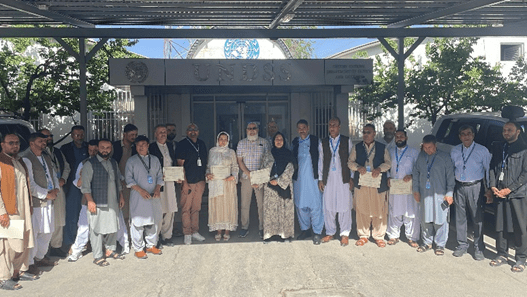
In May, {TESS+} conducted an intensive training in Kabul for SOC assistants from across Afghanistan. Staff from the United Nations Assistance Mission in Afghanistan (UNAMA) and the UN Department of Safety and Security (UNDSS) came together to sharpen the skills that help protect humanitarian personnel in one of the world’s most challenging environments.
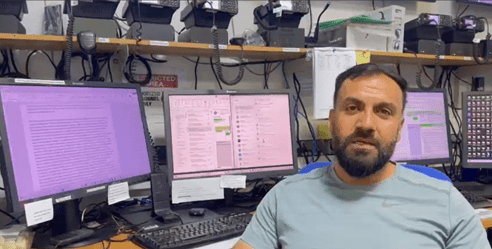
“This wasn’t just a refresher — it was a wake-up call,” said Mohammed Mastansha Mazilumiar a SOC assistant with UNAMA. “We’re not just operating radios; we’re supporting operations that help protect people. The training gave me new tools for troubleshooting and assisting partners — but more importantly, it reminded me why this work matters.”
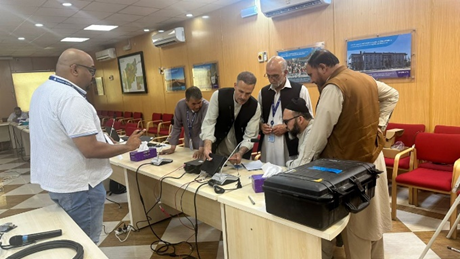
The training placed a strong emphasis on real-world application rather than abstract theory. Participants engaged in hands-on simulations, responded to mock incidents, and practiced using the very tools and technologies they depend on every day.
From tracking personnel movements to sending emergency alerts, each session was designed to build not just technical skills, but also confidence in applying them under pressure. Key topics included the operation and basic troubleshooting of two-way radios, RSOC equipment, and network bridging tools.
Practical exercises brought these concepts to life, featuring MSS voice communication drills, live RSOC software walkthroughs, and guided sessions on the ETA and UNSMIN platforms—used for bulk SMS messaging and tracking team members. These tools are central to the daily operations of any SOC, and the training ensured participants could use them effectively and intuitively.
“This was about preparation, not just information,” said Moaied Altai, {TESS+} Senior ICT Officer and lead facilitator. “When something happens, these SOC teams are the first to act. They need to be sure of their tools — and of themselves.”
Connection, confidence, and coordination
The workshop also served as a valuable opportunity for SOC personnel from across the country to connect and collaborate. Assistants from Herat, Bamyan, Gardez, Kandahar, Fayzabad, Mazar-i-Sharif, Pul-e-Khumri, Kunduz, Maimana, and Kabul came together to share their experiences, discuss common challenges, and exchange practical solutions. These conversations went beyond individual learning—they helped strengthen coordination and foster a sense of shared purpose among teams working in different regions.
Said Hakim Shirzad based in the Kabul SOC, reflected: “I’ve learned about new technologies that will improve how we manage security communications across Afghanistan. It’s going to help me run our centre more effectively — and help keep our teams safe.”
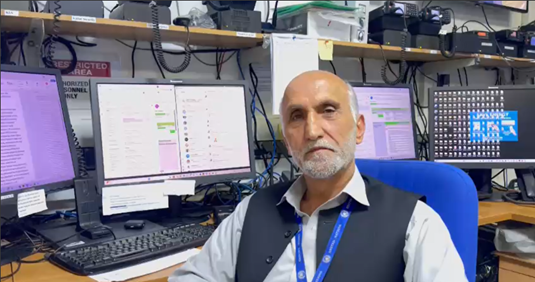
In a country where nearly 23 million people—half the population—rely on humanitarian assistance, the role of SOC assistants is both behind the scenes and absolutely vital. While their work is often invisible, it is the backbone of coordination and safety: they track staff movements, issue timely alerts, and keep critical information flowing smoothly, ensuring that operations continue even in the most challenging circumstances.
Preparedness that saves lives
The investment in training goes beyond technical skills—it’s a strategic commitment to strengthening humanitarian safety and coordination. In a context like Afghanistan, where overlapping crises such as natural disasters and persistent instability continue to pose serious risks, the preparedness of SOC personnel plays a critical role. Their readiness not only helps keep humanitarian workers safe, but also ensures that lifesaving operations remain coordinated, responsive, and effective.
In Kabul, as the day winds down and the SOC lights glow softly into the evening, personnel in the SOC remain at their posts — alert, connected, and now better prepared than ever.
 {TESS+} Telecommunications Security Standards