Where every signal counts
In the rising heat of April, as the call to prayer echoes over the dusty streets of Aden, humanitarians rush to deliver food, water, and medical supplies. They navigate not just broken roads and flooded terrain—but the looming shadow of conflict, where every movement must be calculated, every route carefully chosen. It’s in this precarious world that aid workers in Yemen serve, and it’s where {TESS+} steps in, armed with mission-critical technology and quiet determination.
One of those recently stepping into this volatile zone was John Bursa, deployed to southern Yemen by {TESS+} from 21 April to 05 May this year. His mission: to conduct a comprehensive review of the existing Security Communications System (SCS)—managed by the United Nations Department of Safety and Security (UNDSS)—and to work alongside UNDSS & United Nations Security Management System (UNSMS) field teams to identify gaps and recommend improvements. The goal was to ensure the system meets the International Agency Security Management Network (IASMN) standards and continues to support the safety needs of humanitarian responders operating amid one of the world’s worst humanitarian crises.
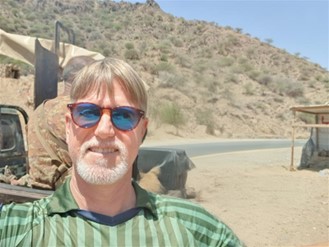
“Given the extremely challenging environment in Yemen, and with the escalating security threats, the Security Communications System (SCS) is the bridge to providing safety and security to humanitarian personnel and the United Nations Security Management System (UNSMS),” says John.
Crackling lines, critical missions
Yemen’s southern regions—particularly Aden, Marib, Mokha, and Turbah—are gripped by a humanitarian emergency that’s been years in the making. Political instability, disease outbreaks, natural disasters, and armed conflict form a relentless cycle of crisis. Aid workers are the lifeline, and yet they are constantly exposed to threats.
To operate safely, these teams rely on more than courage. They need access to connectivity.
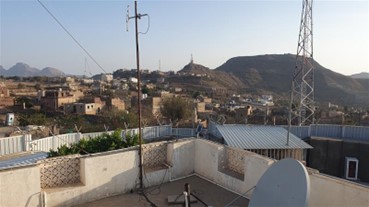
That’s where the SCS—anchored in existing UNDSS infrastructure—plays a vital role. And this is the area in which {TESS+} delivers. John’s assessment mission focused on reviewing the system’s status and functionality, addressing any gaps in coverage, compliance, or coordination, and recommending enhancements for a more secure and reliable network.
Before expanding or improving any SCS, {TESS+} conducts thorough assessments, globally as mandated by the IASMN—studying access limitations, communications breakdowns, and local security dynamics. This groundwork ensures targeted, effective support. And in Yemen, that often means enhancing VHF radio coverage, SCS monitoring, and satellite links—systems that cut through the noise of conflict and chaos to provide a clear line of security communication when it matters most.
“SCS can bridge sites, mitigate risks, and enable a more resilient, redundant, and reliable system to enable and ensure the continuation of humanitarian support to the people of Yemen,” John explains.
He continues, “Together with the collaboration of UNDSS, the ICT Working Group members, and the Emergency Telecommunications Cluster (ETC), {TESS+} will support the roll-out of the recommendations of this current assessment mission in southern Yemen.”
The realities of risk and response
What does this look like on the ground? In practical terms, it means that an aid convoy moving through dangerous terrain can alert others if it’s delayed or attacked. It means a medical team in Mokha can call for help during an outbreak. It means a local office in Turbah can stay in touch with coordination hubs, even if the local internet fails or the power grid collapses.
It means humanitarians can do their job—and stay safe.
In an environment as fragile and fluid as Yemen’s, where the security situation can change in minutes, this isn’t just helpful. It’s essential.
Commitment without a clock
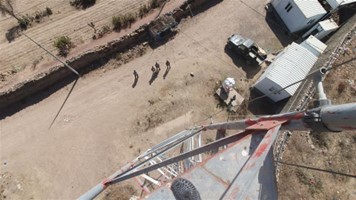
For John Bursa and the rest of the {TESS+} team, this mission doesn’t end with one deployment. It’s a long-term commitment to ensure that those risking their lives to help others are themselves protected. It’s about building systems that last, even in the most hazardous of places.
Yemen is not an easy place to work. But with secure communications, determined partnerships, and people like John on the ground, {TESS+} helps make the impossible possible.
Safety and security of UNSMS personnel are enabled through an effective SCS. And in Yemen, {TESS+} is helping to keep that line open.
 {TESS+} Telecommunications Security Standards